

Products >> New Launches
Adjust Font sizeIncrease Font size  Decrease Font size  Default Font size


HIFENAC INJECTION
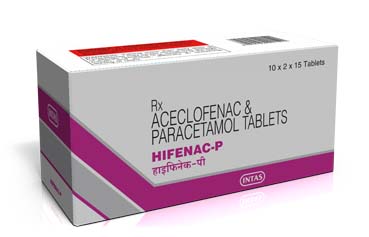
Expanding the horizons of pain management, Intas has recently launched HIFENAC INJECTION.
The launch of Hifenac in 2003, against the backdrop of undesirable side effects of Cox II inhibitors, as well as the increasing awareness of GI side effects and hepatotoxicity caused by non selective Cox inhibitors like diclofenac, ibruprofen & nimesulide, gave a new hope to the medical profession in treating pain. This was because of its unique cytokine inhibiting action at the site of inflammation & tissue damage. Since then Intas has launched a series of products under the Hifenac umbrella like; Hifenac 100mg, Hifenac SR 200mg, Hifenac MR Tabs, Hifenac - D, Hifenac Gel, Hifenac TA & TL, all of which were 1st time launches in the Indian Pharma Market.

Following the resounding success of Hifenac group of products, Intas has introduced Aceclofenac Injection, branded as Hifenac Injection for IM use. Unlike the international brand which is available in lyophilized form, Hifenac Injection, for the first time in the world has been made available in a ready to use form. Hifenac Injection is a non steroidal anti-inflammatory drug containing Aceclofenac as active ingredient. Hifenac Injection is used to relieve moderately severe pain, especially post surgical pain and post traumatic pain. Hifenac Injection is meant for intramuscular administration (upper external gluteus) and is available in 1ml ampoule containing 150 mg Aceclofenac/ml. Hifenac Injection is not a narcotic and is not habit-forming. Dose of Hifenac Injection is 12 hourly (twice a day 12 hours apart) and it should not be used for more than 2 days. Hifenac Injection is available only with doctor's prescription.
Hifenac Injection has better patient compliance profile as the injection is less painful and is economical as compared to other NSAID injections. It contains 150mg Aceclofenac in 1ml of solvent compared to the 3 ml ampoule of the widely used Diclofenac Injection formulations. The onset of action is within 15 to 30 minutes of administration of the injection with pain relief lasting for 8 hrs after 1st dose as seen in the VAS (visual analog scale) scores.

With launch of Hifenac Injection, Intas is set to make its presence felt with a large base of doctors which will include Orthopedicians, Surgeons, General Practitioners and Consulting Physicians. This will add momentum to the increasing popularity of Hifenac with doctors who seek potent yet safe analgesia.

SILOIL
Siloil contains Silicon Oil (polydimethyl siloxane) 1000 centistokes. Siloil is intraocular injectable used during eye surgery to prevent or treat a very serious eye problem called a detached retina. It is injected into the back area of the eye to hold the retina in place while it is healing.
The action of Siloil is twofold. Siloil closes the retinal break(s), and the buoyancy force helps appose the retina to the eye wall while the retinopexy matures or heals. The former is considered by far the more important mechanism of action. The high surface tension of the Siloil bubbles allows them to act as a seal over the retinal break, preventing fluid from moving through the break into the sub retinal space. The existing sub retinal fluid is absorbed, leading to retinal reattachment.

Siloil has been approved by US FDA in the treatment of Retinal detachment. Retinal detachment is a disorder of the eye in which the retina peels away from its underlying layer of support tissue. Initial detachment may be localized, but without rapid treatment the entire retina may detach, leading to vision loss and blindness. It is a medical emergency.

Siloil injection:

  • For Intravitreous use

  • Packing of Siloil 1000: 10 ml Vial

Dosage and administration
Dosage form for injection for detached retina

  • Adults and children-Silioil is injected into the back area of the eye during surgery to hold the retina in place while it is healing. It is usually left in the eye for up to 1 year or longer before it is removed during surgery.

OLOPINE
Olopatadine hydrochloride is an antihistamine and mast cell stabiliser. It inhibits release of histamine from the mast cell. It also acts as relative selective Histamine - H1 receptor antagonist. Following topical ocular instillation in man, Olopatadine has shown to have few systemic exposures.
Olopatadine is the only dual action product specifically designed for conjunctival mast cells. The authors of one study (Butrus et al. (Clin Ther 2001;22:1462-1472)) concluded that one drop of olopatadine was clinically and statistically superior to 28 drops of nedocromil in reducing itching associated with allergic conjunctivitis. Furthermore, olopatadine was found to be significantly more comfortable. Yanni et al. (Arch Ophthalmol 1999; 117:643-647, Ann Allergy Asthma Immunol 1997; 79:541-545) showed that most mast cell stabilisers are designed for lung mast cells and are poor stabilisers of conjunctival mast cells in comparison to olopatadine.

Olopatadine affects the micro cellular processes in more favourable manner to have desired effects e.g.:

  • It interacts least with natural membranes making it more comfortable for ocular tissues

  • Olopatadine suppresses the migration of THP1 Monocytes that play a role in causing inflammatory response of allergy

  • It is not only anti histamine but a mast cell stabiliser, thus has both a symptomatic & preventive effect

  • Olopatadine has shown more influence on the conjunctival mast cells whereas conventional mast cell stabilisers like Sodium Chromoglycate is targeted more towards mast cells in Lungs. The two mast cells are different chemically

Among others, Olopatadine (Olopine) carries a unique distinction that it is the only agent approved by USFDA for all the signs & symptoms of Ocular Allergy viz., Redness, Itching, Chemosis (conjunctival swelling), lid swelling, and watery eyes.

Olopine takes care of these problems with just twice a day dosage. Moreover, there are no serious side effects reported with Olopatadine (Olopine) till date and contraindicated only in hypersensitive patients.

TEROFIB
Terofib contains Tirofiban, a GpIIb/IIIa antagonist useful in ACS & PCI.
Acute coronary syndromes (ACS) represent a physiologic continuum spanning unstable angina, non-Q wave myocardial infarction and Q-wave myocardial infarction. Plaque rupture and intracoronary thrombosis is the most widely accepted underlying mechanism for ACS. Although coronary vasospasm, progressive severe fixed stenosis and increased myocardial demand may precipitate or contribute to unstable angina, a platelet-mediated thrombus may well be the most dominant underlying mechanism in a majority of patients.

The last decade has witnessed a significant understanding of the role that platelets play in ACS. In addition, it became clear that activation of the platelet glycoprotein (Gp) II b/IIIa receptor is the final common pathway in platelet aggregation, which is considered to be a major factor in thrombus formation and MI.
Incorporation of Gp IIb/IIIa receptor inhibitors have earned a prominent place among the strategies used to reduce the risk of ischemic events in patients undergoing coronary interventions.
Tirofiban
Tirofiban is a non-peptide antagonist of GpIIb/IIIa receptor. Tirofiban reversibly inhibits platelet aggregation by binding to a Gp-IIb/IIIa receptor. Number of large scale clinical studies confirmed the efficacy and safety of Tirofiban in the management of Acute Coronary Syndrome patients.

Terofib is indicated in:

  • ACS

  • Patients undergoing PCI

Terofib Injection: Premixed for I.V. use
Tirofiban injection for I.V. infusion is available in a pack of 5 mg/100ml solution for infusion.

Dosage & Administration 
In most patients, Tirofiban should be administered intravenously, at an initial rate of 0.4mcg/kg/min for 30 minutes and then continued at 0.1 mcg/kg/min for at least 48 hours, maximum treatment period 108 hours.
Patients with severe renal insufficiency should receive half the usual rate of infusion.
No dosage adjustment is recommended for elderly or female patients. 
In PRISM-PLUS trial, Tirofiban was administered in combination with heparin for 48 to 108 hours.
The infusion should be continued through angiography and for 12 to 24 hours after angioplasty or athrectomy.

PREGABID
Pregabid - Predictable Response. Persistent Relief… in neuropathic pain (NeP).
Intas has taken a big leap in managing the challenging conditions of neuropathic pain by introducing Pregabid (Pregabalin 25/50/75/150/300) capsules.
Pregabid is a novel neuromodulator, which decreases neuronal excitability by binding to an auxiliary subunit (alpha 2 delta protein) of a voltage gated calcium channel on neurons in the CNS.
Pregabid is a three edged weapon in NeP, as it performs anticonvulsant, anxiolytic & analgesic activities.

Pregabalin was approved by US FDA in Sept. 2004 for the management of:

  • Diabetic peripheral neuropathy (DPN)

  • Postherpetic neuralgia (PHN)

  • As an add on therapy in partial seizures

Recently, it has also been approved by the EC in European Union in the management of central neuropathic pain associated with:

  • Stroke

  • Spinal cord injury

  • Multiple sclerosis (MS)

They have also advocated its use in Generalised Anxiety Disorder (GAD).

Dosage & Administration:
Pregabid dosing can be started with 75 mg bid. The dosage can be further increased to 150 mg bid and 300 mg bid if required.

PREGABID ME
With the introduction of Pregabid ME capsules (Pregabalin 75mg/150mg/300mg + Methycobalamine 750 mcg), Intas now offers comprehensive solution for the management of NeP.

CLINKA-N
Clinka-N is a combination of clindamycin with nicotinamide in gel formulation constituted in aloe and allantoin base. It essentially combines the benefits of two agents (antibacterial & anti -inflammatory) in gel formulation, which provides additional benefits over the conventional antibacterial therapy in the management of acne.
Clinka-N topical gel contains:
Clindamycin Phosphate BP. eq. to Clindamycin.............1 % w/w 
Nicotinamide I.P....................................4 % w/w
In Aloe, Allantoin gel base....................q.s.

Clinka-N is indicated for treatment of mild to moderate acne vulgaris and reduces inflammatory acne lesions.
Clindamycin is a well known semi synthetic antibiotic that is effective against P acne bacteria. Nicotinamide is one of the principle forms of B-complex vitamin, B3 (Niacin) with marked anti-inflammatory activity. It reduces acne lesions, pustules, papules and acne severity. It makes skin irritation less frequent. It decreases the inflammation associated with acne and is non-staining.

Its special base of aloe and allantoin keeps the skin moisturised and smooth. Combination therapy provides complementary and well balanced effect of both components. The product finds a good tolerance among the patients, improving their compliance with treatment, and bringing in positive response in acne.

Dosage & Application:
Face should be washed with mild cleanser before applying Clinka - N gel.
Clinka - N gel is to be applied directly on affected areas two times a day or as directed by physician.
Contact with eye should be avoided. On accidental exposure of Clinka-N to eyes, wash eyes with water. If irritation persists contact the physician.

PREVANOR
Available as Tablets & Injections Prevanor is the Citicoline (CDP-choline). Citicoline belongs to the group of bio-molecules in living systems known as "nucleotides" that play important roles in cellular metabolism. Prevanor (Citicoline) acts as cell membrane phospholipids precursor and neurotransmission enhancer.
Prevanor (Citicoline) is used to up hold the brain function in neuronal deterioration of ischemic, traumatic and degenerative origin. It is therefore indicated in patients after having sustained head injury, stroke or cerebro - vascular trauma and in neurodegenerative disorders like Alzheimer's and Parkinson's Diseases.
Prevanor (Citicoline) has well defined 'MULTIPLE' mode of action with suitable pharmacokinetic properties and high safety. It prevents post-stroke neuronal apoptosis by interfering with the acute stroke sequelae, by restoring the membrane integrity of neurons, enabling brain cells [ischemic penumbra] to endure reduced blood flow and thereby increasing the chances of recovery.
Prevanor (Citicoline) improves neurotransmission of acetylcholine and dopamine in the brain, thereby improving the memory, cognition and overall motor movement in neurodegenerative disorders.

Composition:
Prevanor Tablets
Each film coated tablet contains Citicoline Sodium equivalent to Citicoline 500 mg.

Prevanor Injections - 2 ml & 4 ml vials
Each ml contains Citicoline Sodium equivalent to Citicoline 250 mg. It is compatible with all I.V. isotonic solutions. May also be mixed with hypertonic glucose serum.
Indications Prevanor (Citicoline) is indicated in:

  • Stroke

  • Head Trauma (Brain Injury)

  • Parkinson's Disease

  • Alzheimer's disease

Dosage:
Intravenous & Intramuscular Dose: 500 mg; 2-4 injections per day depending upon the seriousness of the symptoms to be treated.
Oral Dose: Case dependent. Acute treatment 1-2 g/day. Maintenance treatments 500 - 1000 mg/day. These doses can be modified according to the criterion of the physician.

Drug Interactions:
Prevanor potentiates the effects of L - dopa that will boost the antiparkinsonian response to the drug when used concomitantly. Apart from this, it does not have any known drug interactions.

ZONIMID 25/50/100 MG
Zonimid contains zonisamide an antiseizure drug chemically classified as a sulfonamide and is unrelated to other antiseizure agents. Zonimid provides once or twice daily seizure control convenience by blocking sodium channels and reduces voltage-dependent, transient inward currents (T-type Ca2+ currents), consequently stabilizing neuronal membranes and suppressing neuronal hypersynchronization.

Composition:
Each hard gelatin capsule contains
Zonisamide …………25/50/100 mg

Zonimid is indicated as adjunctive therapy in the treatment of partial seizures in adults with epilepsy.
Zonimid does not interfere with the daily intellectual tasks as it shows minimal cognitive impairment.
It does not interact with oral contraceptives. Hence, can be considered safe without the risk of unwanted pregnancy in epileptic women with child bearing potential.
Zonimid shows quicker titration effectiveness at the initial dose of 100 mg daily which can be increased to 200, 300 and 400 mg/day with the dose being stable for at least two weeks.